
Crypto LLC formation is the process of organizing a limited liability company, often a Wyoming digital-asset LLC, to hold and operate cryptocurrency under a written governance structure. The right entity, its tax treatment, and the discipline used to maintain it generally depend on portfolio size, state law, and individual tax facts, so any structure should be reviewed with qualified legal and tax professionals before formation.
What Crypto LLC Formation Is
Crypto LLC formation creates a separate legal entity that titles, holds, and transacts in digital assets through an operating agreement, a registered agent, and ongoing records, rather than holding coins in a personal name. An LLC can add operational separation and, in some states, charging-order protection, but it does not eliminate federal income tax and its liability shield is not absolute. For where entities sit in a broader plan, see the Crypto Wealth Management Hub and the foundational explainer on the benefits of moving crypto into an LLC.
Core Questions
- When does forming a crypto LLC actually make financial sense?
- Should the LLC be a new Wyoming entity or a conversion from another state?
- What digital-asset provisions does the operating agreement need?
- Does transferring crypto into the LLC trigger a taxable event?
- How should the LLC be taxed, disregarded entity or S-corp?
- What annual filings and records keep the entity in good standing?
- What mistakes pierce the corporate veil?
Deciding Whether and When to Form
The first question is usually whether an entity is warranted at all and at what threshold. Work through when an LLC starts to make financial sense versus continuing to buy crypto and, for larger plans, what portfolio levels call for an LLC, trust, or PPLI. If the goal is digital-asset trading specifically, see whether you need a specific business entity for trading digital assets. For families with distinct asset pools or multiple beneficiaries, a series LLC for crypto is sometimes considered, though its inter-series liability separation is legally untested.
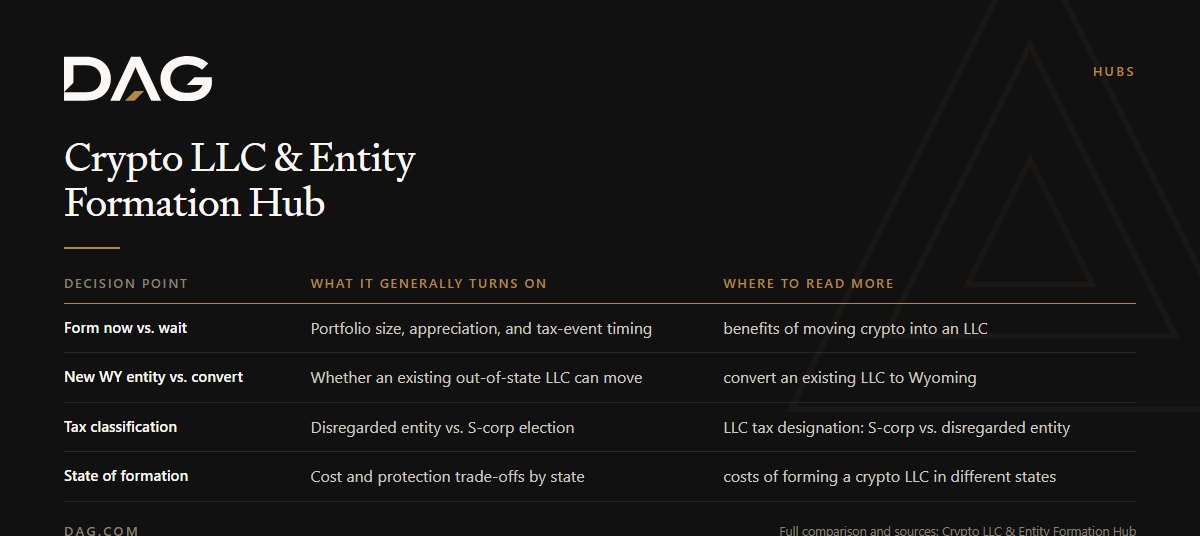
| Decision point | What it generally turns on | Where to read more |
|---|---|---|
| Form now vs. wait | Portfolio size, appreciation, and tax-event timing | benefits of moving crypto into an LLC |
| New WY entity vs. convert | Whether an existing out-of-state LLC can move | convert an existing LLC to Wyoming |
| Tax classification | Disregarded entity vs. S-corp election | LLC tax designation: S-corp vs. disregarded entity |
| State of formation | Cost and protection trade-offs by state | costs of forming a crypto LLC in different states |
Forming the Wyoming LLC
Most digital-asset LLCs are formed in Wyoming, and the complete process for setting up a Wyoming LLC to hold and protect digital assets walks through the filings and documents involved. Two recurring questions are whether to use an existing out-of-state LLC or create a new Wyoming entity and what a registered agent does and the associated fees. Founders also frequently ask about the tax benefits and limits of holding crypto in a Wyoming LLC, which are real but narrower than marketing often suggests.
Drafting the Operating Agreement
A generic operating agreement rarely fits digital assets, so the document needs crypto-specific language. Review what provisions your operating agreement should include that generic templates miss and how to customize the operating agreement for digital-asset management and transfers. Practical drafting questions include whether to list a wallet address or cold-wallet serial number in the operating agreement and whether the operating agreement is filed with the state or kept private.
Funding the Entity and the Tax Question
Moving assets into the LLC is where tax confusion is common. Contributing crypto to a single-member, disregarded LLC under §721 is generally not a taxable event, and whether transferring crypto into the LLC triggers a taxable event covers the usual outcomes and the exceptions. On the operational side, see how to handle shifting assets from exchanges to LLC accounts. Tax classification matters too: weigh whether to elect S-corp or stay a disregarded entity and why an S-corp is usually the wrong choice for digital assets, and when it isn't. The default classification itself turns on member count, covered in single-member vs multi-member LLC for crypto, and the practical first step is getting an EIN for a crypto LLC and deciding whether any Form 8832 or 2553 election is warranted.
Compliance and Corporate-Veil Protection
An LLC's liability shield is only as strong as the records behind it, and charging-order protection is not absolute. Understand what causes most LLCs to have the corporate veil pierced and the mistakes to avoid, then keep the entity clean with the annual compliance tasks required to keep a Wyoming LLC active. Day-to-day discipline includes the written actions and consents required to move assets in and out of the LLC and using templates and guidance for maintaining LLC minutes and records. For cross-border families, see how members in different jurisdictions affect your crypto entity structure. Maintenance also includes planning for the end of the entity's life: build continuity through Wyoming LLC succession planning for crypto so control and key access survive a death, and follow a deliberate process when it is time to dissolve a crypto LLC rather than letting it lapse.
Pairing the LLC With a Trust
Many plans pair an LLC with a trust rather than choosing one. The Crypto Trust Structures Hub covers the trust side, and operationally a trust often owns the entity, see trust-owned LLC for crypto assets. When custody questions arise around which custodians or accounts the entity can use, the Crypto Custody Hub is the orientation point. To amend documents as the plan evolves, review how to update or amend LLC or trust documents after setup.
Related Questions
Does putting crypto in an LLC avoid federal taxes?
No. An LLC is generally a pass-through or disregarded entity for federal income tax, so the underlying crypto gains still flow to the owner's return. An LLC may change asset-protection exposure and recordkeeping, but it does not erase income, capital-gains, or self-employment tax. Confirm treatment with a qualified tax professional.
Is contributing crypto to my own LLC a taxable event?
Generally no when the LLC is a single-member, disregarded entity or you contribute to a partnership under §721 in exchange for an interest, the contribution itself is usually not a sale. Specific facts, multi-member structures, and liabilities can change this, so verify before transferring.
Does an LLC fully protect my crypto from lawsuits?
No structure is absolute. Charging-order and veil protection depend on state law and on maintaining clean separation between personal and entity assets; commingling, undercapitalization, or skipped formalities can pierce the veil. Treat the LLC as one layer, not a guarantee.
Sources
- IRS: Digital assets
- IRS Publication 541: Partnerships (contributions under §721)
- Wyoming Secretary of State: Business Division
- IRS: S corporations
Compliance Note
This hub is educational and does not provide legal, tax, or investment advice. Forming an LLC or trust and drafting an operating agreement or other entity documents is the practice of law; Digital Ascension Group coordinates qualified legal and tax professionals and does not provide legal advice or draft these documents itself. Advisory services are provided through DAG Wealth. Entity, tax, and protection outcomes depend on the facts and applicable law and should be confirmed with qualified professionals before you act. Registration does not imply a certain level of skill or training.