
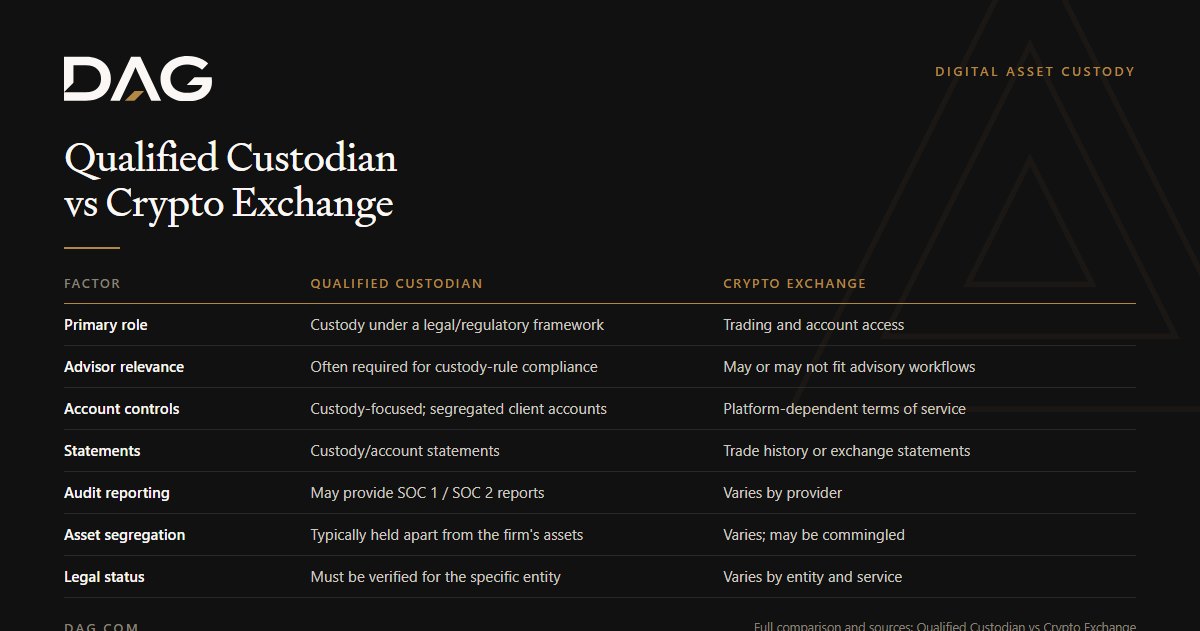
A qualified custodian is a regulated entity that holds client assets under a defined legal and custody framework, while a crypto exchange is a trading platform that lets users buy and sell digital assets and may also hold them. Comparing a qualified custodian vs a crypto exchange matters because trading access and qualified custody are not the same arrangement, and the distinction can carry legal weight.
What Is a Qualified Custodian?
A qualified custodian is generally a bank, trust company, or other regulated institution that maintains custody of client assets and provides account statements. Under the SEC custody rule, registered advisers that hold client assets are often required to keep those assets with a qualified custodian rather than in their own name. A crypto exchange, by contrast, exists primarily to match buyers and sellers; some operators run a separate, regulated entity that performs custody, but an ordinary exchange account is not automatically qualified custody. For how this category is defined and tested, see what is a qualified crypto custodian.
Why This Matters
RIAs, family offices, trusts, and LLCs need to know who legally holds the assets and under what account terms. Trading access and qualified custody serve different purposes, and the difference shapes custody-rule analysis, audit readiness, and what happens to assets if a provider fails. For the broader picture, this page sits under the Digital Asset Custody Hub.
How It Works
| Factor | Qualified Custodian | Crypto Exchange |
|---|---|---|
| Primary role | Custody under a legal/regulatory framework | Trading and account access |
| Advisor relevance | Often required for custody-rule compliance | May or may not fit advisory workflows |
| Account controls | Custody-focused; segregated client accounts | Platform-dependent terms of service |
| Statements | Custody/account statements | Trade history or exchange statements |
| Audit reporting | May provide SOC 1 / SOC 2 reports | Varies by provider |
| Asset segregation | Typically held apart from the firm's assets | Varies; may be commingled |
| Legal status | Must be verified for the specific entity | Varies by entity and service |
When you evaluate a provider, confirm which legal entity actually holds the assets, whether client assets are segregated, and whether the custodian produces independent control reports. A useful contrast is qualified custody vs self-custody for crypto wealth, which covers the trade-offs when you hold keys yourself instead of using a regulated custodian.
Evidence Standard
This article compares categories and does not determine the status of any specific provider. Any named platform is referenced for context only; verify each provider's current legal status, registrations, and account agreements directly.
When It May Help to Draw the Distinction
- An RIA is evaluating client crypto custody and its custody-rule obligations.
- A family office relies on exchange accounts and wants to confirm how assets are held.
- A trust or LLC needs proper account titling and segregation.
- A client assumes exchange custody and qualified custody are the same thing.
When It May Not Be Enough
A category label alone does not settle the question. Provider legal status, account agreements, insurance terms, and regulatory treatment must be verified directly. If you are weighing how to vet a provider in depth, the crypto custody due diligence checklist walks through the questions to ask before funding an account.
Related Questions
Can a crypto exchange also offer qualified custody?
Sometimes. Some companies operate a separate, regulated trust company or institutional custody affiliate alongside the exchange. The relevant legal entity and the specific account agreement determine the answer, so confirm which entity holds the assets before assuming the account qualifies.
Why do RIAs care about this distinction?
Advisers may have custody-rule obligations that generally require client assets to be maintained with a qualified custodian. Holding assets in an ordinary exchange account may not satisfy those requirements. The facts depend on the arrangement, so advisers typically confirm the structure with qualified compliance counsel.
Is a qualified custodian always the better choice?
Not universally. A qualified custodian may be required or appropriate for certain advisory and institutional use cases, but it does not remove market, custody, or operational risk, and investors still need to perform their own diligence. Registration or qualified status alone does not guarantee skill or outcomes.
Bottom Line
Do not assume a crypto exchange account is equivalent to qualified custody. For serious wealth structures, the legal entity, asset segregation, and custody agreement are what matter. Confirm them before relying on any account, and consult a qualified professional for your specific situation.
Sources
Compliance Note
This article is for general educational purposes and is not legal, compliance, custody, or investment advice.