
A crypto wealth planning checklist is a working list of the records, controls, and professional decisions you should organize before a major sale, transfer, trust funding, custody change, or liquidity event. It covers asset inventory, ownership, cost basis, custody, concentration risk, tax estimates, estate access, and advisor coordination so nothing material is missed.
What This Checklist Covers
Crypto wealth planning is the work of structuring digital assets for tax, custody, estate, and risk outcomes the way you would any concentrated holding. Because the IRS generally treats digital assets as property, each disposal can be a taxable event, and self-custodied keys create succession and control problems that traditional accounts do not. This checklist organizes those moving parts; it is a starting framework, not advice for your specific facts. For the broader picture, see what crypto wealth management involves and the Crypto Wealth Management Hub.
Checklist
- Create a wallet and account inventory. List every wallet, exchange account, and custodian, with addresses and approximate balances.
- Confirm legal ownership of each asset. Note whether each holding sits with an individual, an entity, or a trust.
- Preserve transaction history and cost basis. Export records early; gaps are hard to reconstruct later.
- Review custody and transfer controls. Document who can move assets, and whether multi-sig or qualified custody applies.
- Identify concentration risk. Flag any single token or platform that dominates the portfolio.
- Estimate tax impact before sales. Model gains generally before disposing, not at filing.
- Review trust, LLC, or estate planning needs. Consider whether a Wyoming digital asset LLC or directed trust fits.
- Create secure access instructions. Ensure heirs and fiduciaries can locate keys without exposing them prematurely.
- Review custodian due diligence. Check SOC 1/SOC 2 reports, insurance scope, and qualified-custodian status.
- Coordinate CPA, attorney, advisor, and custodian roles. Define who owns each decision.
- Document decisions and open issues. Keep a dated record of what was settled and what remains.
Priority Order
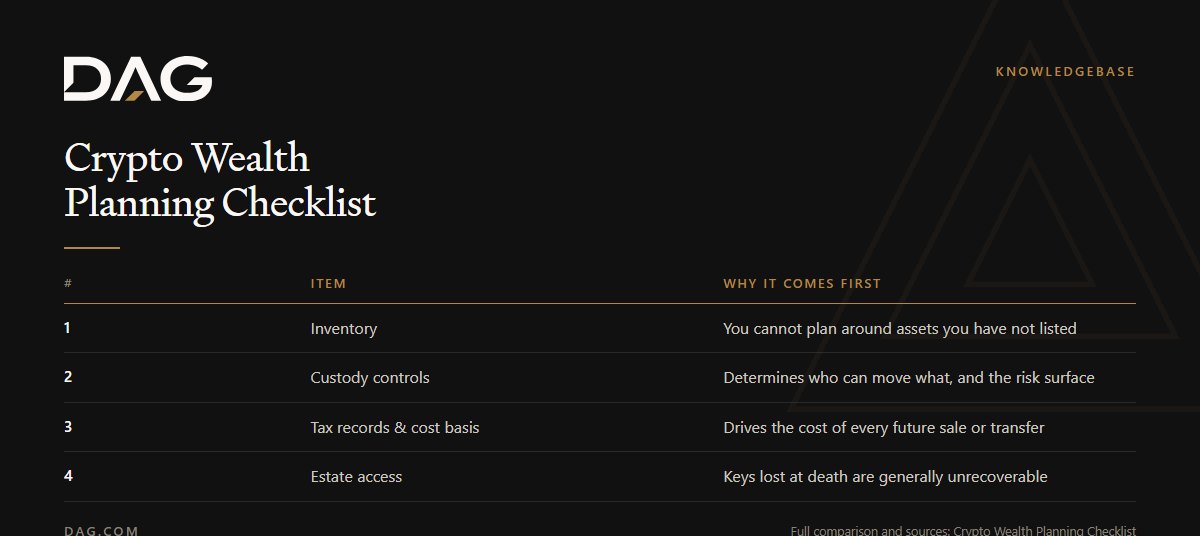
Start with these four, in order. Each later planning decision depends on them.
| # | Item | Why it comes first |
|---|---|---|
| 1 | Inventory | You cannot plan around assets you have not listed |
| 2 | Custody controls | Determines who can move what, and the risk surface |
| 3 | Tax records & cost basis | Drives the cost of every future sale or transfer |
| 4 | Estate access | Keys lost at death are generally unrecoverable |
No checklist removes market, custody, or tax risk; it reduces the chance of an avoidable mistake. Work through custody trade-offs in qualified custody vs self-custody and tax sequencing in crypto tax planning for HNW investors.
Related Questions
When should I work through a crypto wealth planning checklist?
Generally before any event that changes ownership, custody, or tax exposure, a large sale, a transfer into a trust or LLC, a custodian switch, or a liquidity event. Running it early gives time to fix record gaps before they become costly.
Do I need professionals, or can I do this alone?
You can organize the inventory and records yourself, but ownership structuring, tax estimates, and estate access generally warrant a CPA, an attorney, and a qualified adviser. The checklist is meant to prepare for those conversations, not replace them.
Does using a qualified custodian remove my risk?
No. A qualified custodian and SOC-audited controls can reduce certain operational and custody risks, but market, tax, and counterparty risks remain, and registration or audits alone do not guarantee any outcome. Review the facts with a qualified professional.
Sources
Compliance Note
This checklist is educational and does not provide legal, tax, investment, fiduciary, or custody advice. Crypto wealth planning should be reviewed with qualified professionals.