
Yes, RIAs can generally recommend Bitcoin ETFs when the recommendation fits the client's objectives, risk tolerance, and time horizon, is properly disclosed, satisfies the firm's fiduciary duty, and aligns with compliance policies. A spot Bitcoin ETF trading in a brokerage account does not remove the adviser's duty to analyze suitability, fees, and risk before recommending it.
What a Bitcoin ETF Is for Advisory Purposes
A spot Bitcoin ETF is an exchange-traded fund that holds Bitcoin (or, for futures-based products, Bitcoin futures) and trades on a public exchange like any other listed security. For an RIA, that means the position can sit in a standard brokerage account, settle through familiar rails, and appear on existing statements. It is still crypto exposure, so it carries the same market volatility as the underlying asset even when the wrapper looks conventional. Whether and how advisers can recommend crypto at all is covered in can financial advisors recommend crypto.
The fact that a product trades through a brokerage account does not eliminate the need for analysis. The wrapper changes the operational mechanics, not the underlying risk.
Questions Before Recommending
Work through a documented checklist before placing the recommendation in a client file:
- Why is Bitcoin exposure appropriate for this client's goals and risk tolerance?
- Why use an ETF instead of direct Bitcoin, a crypto SMA, or no exposure at all?
- What are the fund's expense ratio, sponsor, and tracking characteristics?
- What market and concentration risks does the position add to the portfolio?
- How does the position size fit the overall allocation and rebalancing plan?
- What disclosures does the client need to receive and acknowledge?
- How will the position be monitored, and what triggers a review?
The reasoning behind each answer belongs in writing; see how should RIAs document crypto recommendations for the record-keeping standard.
ETF vs Direct Bitcoin
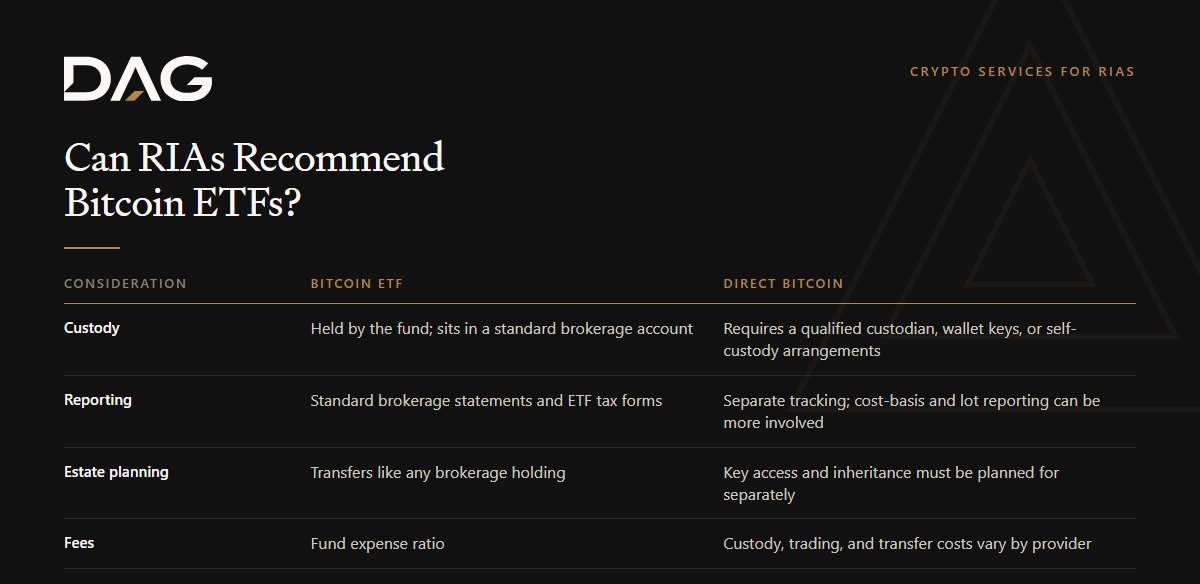
A Bitcoin ETF and directly held Bitcoin give a client similar price exposure through very different operational paths. The choice affects custody, tax reporting, and estate planning, so advisers should document why the implementation method fits the client. A fuller treatment lives in spot Bitcoin ETF vs direct Bitcoin for advisors.
| Consideration | Bitcoin ETF | Direct Bitcoin |
|---|---|---|
| Custody | Held by the fund; sits in a standard brokerage account | Requires a qualified custodian, wallet keys, or self-custody arrangements |
| Reporting | Standard brokerage statements and ETF tax forms | Separate tracking; cost-basis and lot reporting can be more involved |
| Estate planning | Transfers like any brokerage holding | Key access and inheritance must be planned for separately |
| Fees | Fund expense ratio | Custody, trading, and transfer costs vary by provider |
| Control | No direct access to the underlying coins | Direct ownership of the asset and its keys |
Neither path removes market, custody, or tax risk; it relocates where that risk sits.
Related Questions
Are Bitcoin ETFs covered by FDIC or SIPC insurance against losses?
No. SIPC may protect against the failure of a brokerage in limited ways, but it does not protect against investment losses, and FDIC insurance does not apply to securities or crypto. A Bitcoin ETF can lose value with the price of Bitcoin. Confirm the specifics with the fund documents and a qualified professional.
Does recommending a Bitcoin ETF change an RIA's fiduciary duty?
No. The fiduciary duty to act in the client's best interest applies regardless of the wrapper. The adviser still owes a suitability analysis, fee scrutiny, disclosure, and ongoing monitoring. SEC registration itself does not guarantee skill or a particular outcome; it is a baseline obligation, not a credential of performance.
Can an RIA bill on a Bitcoin ETF held in a client account?
Generally yes when the position sits in an account the firm advises on, subject to the firm's fee policies and disclosures. Billing on crypto a client holds elsewhere raises separate questions covered in can RIAs bill on held-away crypto. Confirm the approach with compliance counsel.
Sources
- SEC: Investment Adviser Public Disclosure
- SEC: Commission Interpretation Regarding Standard of Conduct for Investment Advisers
- SEC Investor.gov: Crypto Assets
Compliance Note
This article is educational and does not provide legal, compliance, tax, investment, fiduciary, ETF, or custody advice. RIAs should consult compliance counsel before recommending crypto products. Registration does not imply a certain level of skill or training.