
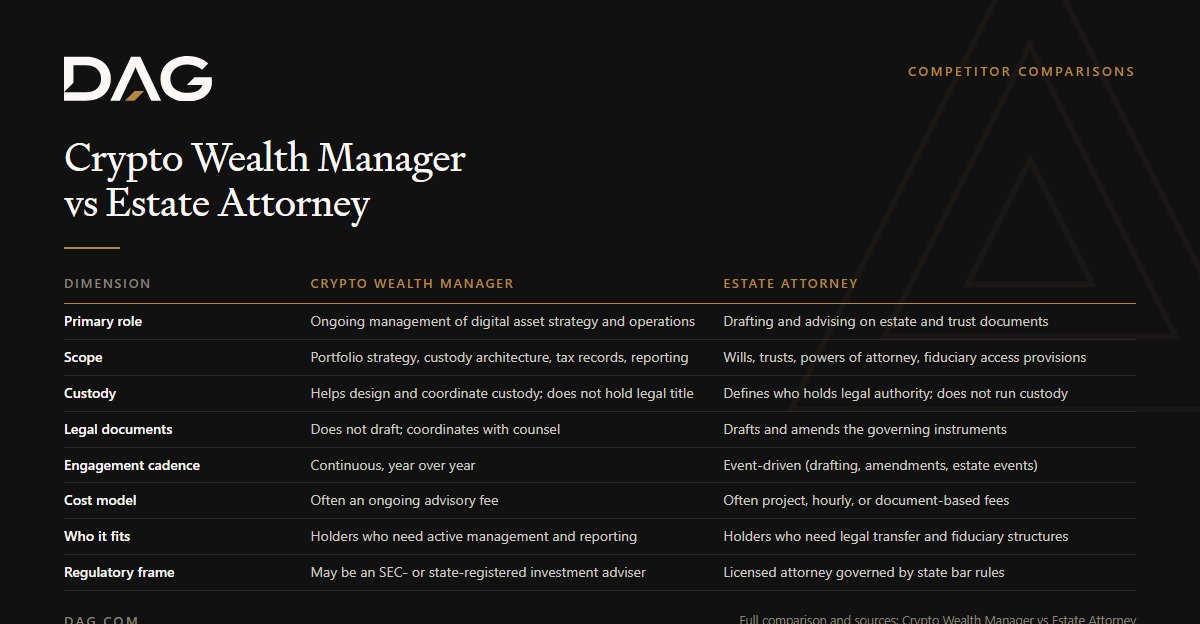
In the crypto wealth manager vs estate attorney comparison, the two roles solve different problems. A crypto wealth manager coordinates digital asset strategy, custody architecture, tax records, and reporting on an ongoing basis. An estate attorney drafts the legal instruments, wills, trusts, and fiduciary authority, that govern how those assets transfer. Many high-net-worth crypto holders work with both.
The distinction matters because crypto estate planning has two layers: the legal documents that grant authority, and the operational access that makes those documents executable. A trust can name a successor trustee, but that trustee still needs a workable path to the keys, exchange accounts, and records. The attorney generally handles the first layer; the wealth manager generally helps with the second.
Crypto Wealth Manager
A crypto wealth manager is an ongoing advisory role focused on the management and operations of a digital asset portfolio. Depending on the engagement, that can include portfolio strategy, custody architecture, wallet and account inventory, tax coordination, liquidity planning, and reporting. The work continues year to year as holdings, prices, and rules change. For broader context on how this role fits into a household's overall plan, see the Crypto Wealth Management Hub.
A wealth manager does not draft legal documents or render legal opinions. Where an engagement touches estate or trust mechanics, the manager generally coordinates with the client's attorney rather than substituting for one.
Estate Attorney
An estate attorney is a licensed legal professional who drafts and advises on the documents that direct how assets pass to heirs and beneficiaries. For crypto holders, that often means wills, revocable or irrevocable trusts, powers of attorney, fiduciary access provisions for digital assets, trust-owned LLCs, and the legal language that authorizes a fiduciary to take control. The attorney's role is concentrated at the points where documents are created or amended, not in the day-to-day handling of the portfolio.
What an attorney typically does not do is run custody operations, reconcile wallet balances, or maintain the cost-basis records a return depends on. Those are operational tasks that usually sit with the wealth manager or the client's own team.
How They Compare
| Dimension | Crypto Wealth Manager | Estate Attorney |
|---|---|---|
| Primary role | Ongoing management of digital asset strategy and operations | Drafting and advising on estate and trust documents |
| Scope | Portfolio strategy, custody architecture, tax records, reporting | Wills, trusts, powers of attorney, fiduciary access provisions |
| Custody | Helps design and coordinate custody; does not hold legal title | Defines who holds legal authority; does not run custody |
| Legal documents | Does not draft; coordinates with counsel | Drafts and amends the governing instruments |
| Engagement cadence | Continuous, year over year | Event-driven (drafting, amendments, estate events) |
| Cost model | Often an ongoing advisory fee | Often project, hourly, or document-based fees |
| Who it fits | Holders who need active management and reporting | Holders who need legal transfer and fiduciary structures |
| Regulatory frame | May be an SEC- or state-registered investment adviser | Licensed attorney governed by state bar rules |
Fee structures and exact scope vary by firm and by engagement, so treat the cost and scope rows as general patterns rather than fixed terms. Confirm specifics directly with any professional you are evaluating.
Where They Work Together
Crypto estate planning usually needs both legal drafting and operational access planning, and the two roles tend to interlock. The attorney may draft the authority, a trust, a power of attorney, a fiduciary access clause, while the wealth manager helps make that authority executable by coordinating custody, documenting where assets live, and keeping records a successor can actually use. This split mirrors the crypto custodian vs crypto wealth manager distinction, where holding assets and managing them are deliberately separate functions. Holders sorting out advisory roles may also find the crypto wealth manager vs financial advisor comparison and the tax-coordination questions in crypto wealth manager vs crypto tax CPA useful when mapping out who does what.
Related Questions
Do I need both a crypto wealth manager and an estate attorney?
It depends on your facts. Holders with meaningful digital assets and heirs often use both because the roles address different needs, ongoing management versus legal transfer. Smaller or simpler situations may need only one. A conversation with each professional can help you decide what your plan actually requires.
Can a crypto wealth manager draft my will or trust?
Generally no. Drafting wills and trusts is the practice of law and belongs to a licensed attorney. A wealth manager can help organize the operational details those documents reference, custody arrangements, account inventories, records, but the legal instruments themselves should be prepared by counsel.
How does crypto custody planning fit into estate planning?
Custody planning determines whether a fiduciary can actually reach the assets a document grants them. Legal authority without a workable access path can leave heirs stuck, so custody design and estate drafting generally work best in coordination. The right approach depends on how your keys, accounts, and structures are arranged.
Who keeps the crypto tax records, the wealth manager or the attorney?
Tax recordkeeping is usually an operational task closer to the wealth manager's role than the attorney's, though some holders maintain their own records or use a CPA. Accurate cost-basis and transaction history matter for both reporting and estate transfer, so it helps to confirm early who owns that responsibility.
Sources
Compliance Note
This article is educational and does not provide legal, tax, investment, fiduciary, estate, or custody advice. The roles described are general and can vary by firm, engagement, and jurisdiction. Registration as an investment adviser does not imply a particular level of skill or training, and naming professional categories here is not an endorsement of any specific provider. Crypto assets carry risk, including loss of principal; nothing here implies guaranteed yield, a stable value, or FDIC or SIPC protection. Investors should verify each professional's role, qualifications, and regulatory standing before engaging them and should consult their own legal, tax, and financial advisers. Registration does not imply a certain level of skill or training.