
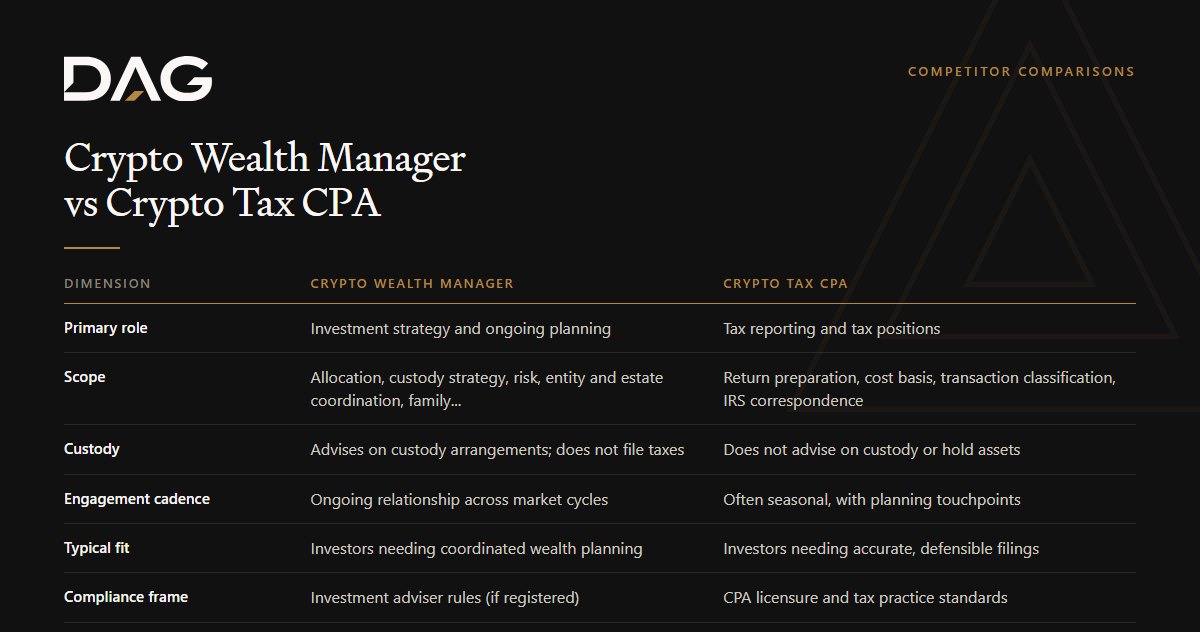
The difference in a crypto wealth manager vs crypto tax CPA comes down to scope. A crypto wealth manager coordinates investment strategy, custody, portfolio risk, entity and estate planning, and family reporting. A crypto tax CPA prepares and advises on tax returns, cost basis, income recognition, and compliance. High-net-worth crypto investors often work with both.
Defining Each Role
A crypto wealth manager is an investment-focused advisor who helps you build and maintain a digital asset strategy: how assets are allocated, where they are custodied, how risk is managed, and how the holdings fit into trusts, LLCs, and a broader estate. Wealth managers who are investment advisers operate under a fiduciary or suitability framework, depending on registration.
A crypto tax CPA is a licensed accountant focused on reporting. The work centers on classifying transactions, reconciling cost basis, recognizing income from events like staking and airdrops, and preparing returns that hold up under IRS scrutiny. Both roles are distinct, and the right scope for each depends on your facts.
Crypto Wealth Manager vs Crypto Tax CPA at a Glance
| Dimension | Crypto Wealth Manager | Crypto Tax CPA |
|---|---|---|
| Primary role | Investment strategy and ongoing planning | Tax reporting and tax positions |
| Scope | Allocation, custody strategy, risk, entity and estate coordination, family reporting | Return preparation, cost basis, transaction classification, IRS correspondence |
| Custody | Advises on custody arrangements; does not file taxes | Does not advise on custody or hold assets |
| Engagement cadence | Ongoing relationship across market cycles | Often seasonal, with planning touchpoints |
| Typical fit | Investors needing coordinated wealth planning | Investors needing accurate, defensible filings |
| Compliance frame | Investment adviser rules (if registered) | CPA licensure and tax practice standards |
Costs vary by firm, asset complexity, and scope, so confirm fee structures directly with each professional rather than assuming a standard rate.
What a Crypto Wealth Manager May Help With
- Portfolio allocation.
- Custody strategy.
- Risk management.
- Trust and LLC coordination.
- Family reporting.
- Coordination across your advisor team.
- Liquidity and diversification planning.
This planning sits inside the broader picture covered in our Crypto Wealth Management Hub, which connects custody, structures, and reporting.
What a Crypto Tax CPA May Help With
- Tax return preparation.
- Cost basis review.
- Transaction classification.
- Staking, airdrop, and DeFi reporting.
- Estimated tax planning.
- Tax documentation.
- IRS correspondence if needed.
Where the Roles Overlap
Both professionals may discuss records, realized gains, income events, and planning timelines. The line that matters: tax filing and tax advice should come from qualified tax professionals, while investment and wealth planning should be handled by appropriately qualified wealth advisors. The two often coordinate, which is why investors weigh this split the same way they compare a crypto wealth manager against an estate attorney or a general financial advisor, each covers a different slice of the same plan.
Related Questions
Do I need both a crypto wealth manager and a crypto tax CPA?
It depends on your situation. Many high-net-worth investors use both because the roles solve different problems, one manages the investment plan, the other handles tax reporting. Someone with simpler holdings may need only one. Confirm scope with each professional before engaging.
Can a crypto wealth manager file my taxes?
Generally no. Tax preparation and tax advice should come from a qualified tax professional such as a CPA. A wealth manager may coordinate with your CPA and share records, but filing returns sits outside typical wealth-management scope. Confirm what each professional is licensed to do.
How do I check a crypto wealth manager's qualifications?
Investment advisers and their representatives are generally searchable through the SEC's Investment Adviser Public Disclosure system. Registration alone does not guarantee skill or results, so review the disclosed background, services, and any conflicts, and ask how the advisor handles digital assets specifically.
Sources
- IRS: Digital assets
- IRS: Frequently asked questions on digital asset transactions
- SEC: Investment Adviser Public Disclosure
Compliance Note
This article is educational and does not provide legal, tax, accounting, investment, or custody advice. Investors should confirm each professional's qualifications and scope of service. Registration with the SEC does not imply a particular level of skill or training, and digital assets carry risk, including the potential loss of principal; nothing here implies guaranteed returns, yield, or protection such as FDIC or SIPC coverage.