
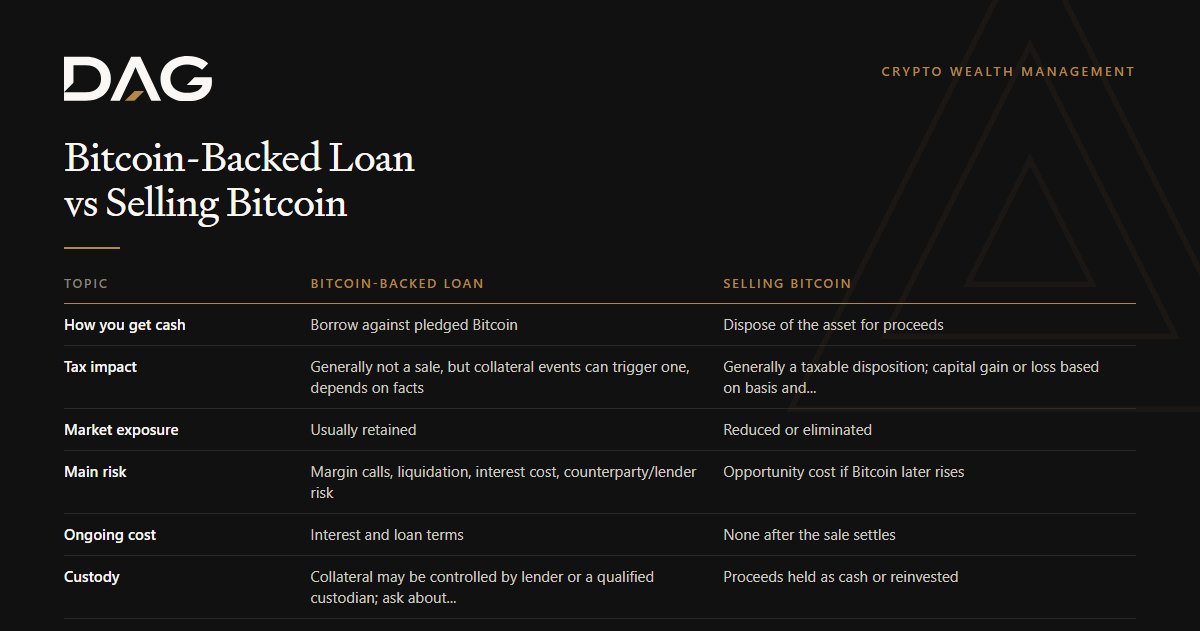
The choice between a bitcoin backed loan vs selling bitcoin comes down to taxes, risk tolerance, and custody. A loan pledges Bitcoin as collateral to raise cash while you keep the position; a sale disposes of the asset, which may trigger a taxable gain. Neither is automatically better, and the right answer depends on your facts.
What These Two Options Are
A Bitcoin-backed loan raises cash by pledging Bitcoin as collateral, so you keep market exposure but take on debt, interest, and collateral risk. Selling Bitcoin raises cash by disposing of the asset, which generally ends that market exposure and may create a taxable event. Both produce liquidity; they differ in what you give up to get it.
Selling Bitcoin
Selling Bitcoin generally creates a taxable event, depending on your cost basis and holding period. The IRS treats digital assets as property, so a sale can produce a capital gain or loss. Selling also reduces concentration risk and raises cash without ongoing loan obligations, which matters if a large share of your net worth sits in one asset. If concentration is the real concern, weigh selling against a longer-term crypto concentration risk management plan rather than treating it as a one-time decision.
Borrowing Against Bitcoin
Borrowing against Bitcoin can defer a sale and the gain that may come with it, but it introduces loan terms, collateral risk, possible margin calls, interest costs, and counterparty exposure to the lender. If Bitcoin's price falls, the lender may require more collateral or liquidate the pledged coins, sometimes at the worst possible moment. Where the collateral is held also matters: confirm whether a qualified custodian segregates the coins or whether the lender rehypothecates them. The broader trade-offs are covered in crypto-backed loans for high-net-worth investors.
Comparison Table
| Topic | Bitcoin-Backed Loan | Selling Bitcoin |
|---|---|---|
| How you get cash | Borrow against pledged Bitcoin | Dispose of the asset for proceeds |
| Tax impact | Generally not a sale, but collateral events can trigger one, depends on facts | Generally a taxable disposition; capital gain or loss based on basis and holding period |
| Market exposure | Usually retained | Reduced or eliminated |
| Main risk | Margin calls, liquidation, interest cost, counterparty/lender risk | Opportunity cost if Bitcoin later rises |
| Ongoing cost | Interest and loan terms | None after the sale settles |
| Custody | Collateral may be controlled by lender or a qualified custodian; ask about rehypothecation | Proceeds held as cash or reinvested |
| Reversibility | Position can be unwound by repaying the loan | Sale is final once settled |
How to Decide Between the Two
Work through these questions with a qualified adviser before committing:
- What is the tax cost of selling? Estimate the capital gain using your cost basis and holding period. A large unrealized gain raises the relative appeal of borrowing, but the tax bill is only one input.
- Can you survive a margin call? Model a sharp price drop. If a forced liquidation would be ruinous, a loan may carry more risk than it appears to.
- Where does the collateral sit? Ask whether a qualified custodian holds the Bitcoin, whether it is segregated, and whether the lender can rehypothecate it.
- How concentrated are you? If Bitcoin dominates your net worth, selling some may serve diversification goals that a loan does not.
- What is the cash actually for? A short-term need is different from a permanent lifestyle change.
These questions sit inside a broader plan; a crypto financial planner can help weigh them against your goals, and the crypto wealth management hub collects the related topics in one place.
Related Questions
Does a Bitcoin-backed loan trigger taxes?
Generally, taking a loan against Bitcoin is not itself a sale, so it usually does not create an immediate taxable event. But collateral events, liquidation, certain foreclosures, or some in-kind transfers, can be treated as dispositions. The treatment depends on your facts, so confirm it with a qualified tax professional.
What happens if Bitcoin's price drops while I have a loan?
A falling price can push the loan past its loan-to-value limit, prompting a margin call for more collateral or a forced sale of the pledged Bitcoin. That sale may itself be taxable and can crystallize a loss of the position at a low point. Review the lender's margin terms before borrowing.
Is selling Bitcoin safer than borrowing against it?
Neither is inherently safe. Selling removes market and margin-call risk but can create a tax bill and opportunity cost if Bitcoin later rises. Borrowing keeps exposure but adds interest, counterparty, and liquidation risk. No strategy removes market, custody, or tax risk entirely. The lower-risk choice depends on your goals, time horizon, and tolerance for a forced sale.
Who should I talk to before deciding?
Coordinate a qualified tax professional, a lending or custody specialist, and a fiduciary adviser. Working with a digital asset wealth advisor who acts as a fiduciary can help align the loan-or-sell decision with your estate plan and overall financial picture.
Sources
- IRS: Digital assets
- IRS: Frequently asked questions on digital asset transactions
- SEC Investor.gov: Crypto Assets
Compliance Note
This article is educational and does not provide legal, tax, lending, investment, fiduciary, or custody advice. Investors should review both options with qualified professionals.