
If you have been scammed in crypto, act fast: stop all contact with the scammer, document everything, report to the FBI's IC3 and the FTC, notify any exchange involved, and consult an attorney about civil remedies. Recovery is possible but often limited because blockchain transactions are irreversible. Be wary of "recovery services", many are a second scam.
First Steps in the First Hours
Speed matters because funds move quickly through chains of wallets. Take these actions in order.
- Cut off the scammer. Stop sending money. Do not send "fees," "taxes," or "unlock payments" to release funds, that demand is itself a hallmark of the scam continuing.
- Preserve evidence. Save transaction hashes (TXIDs), wallet addresses, dates, amounts, screenshots of conversations, websites, and any names, phone numbers, or emails used. This record is what every report and investigation will need.
- Notify the exchange. If the funds passed through a regulated exchange, contact its fraud or compliance team immediately. Exchanges can sometimes freeze funds that have not yet been withdrawn if alerted quickly.
- Secure your accounts. Assume related credentials are compromised. Change passwords, enable or reset two-factor authentication, and move any remaining assets to a new, secure wallet.
- Report to authorities (next section), do this even if amounts are small. Reports build the cases that lead to enforcement and occasional recovery.
Where to Report a Crypto Scam
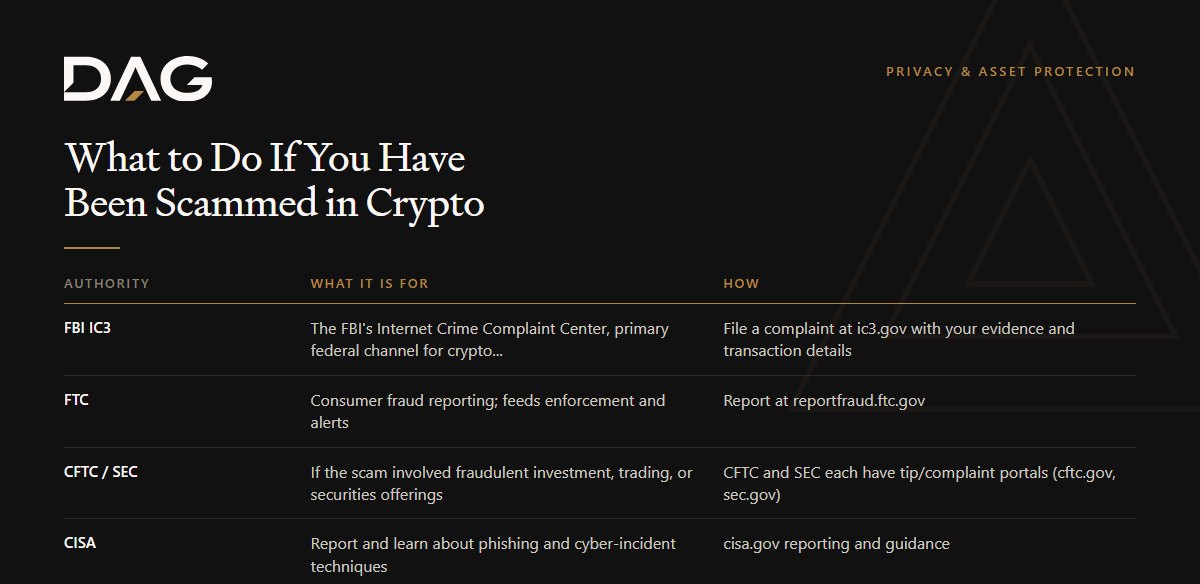
| Authority | What it is for | How |
|---|---|---|
| FBI IC3 | The FBI's Internet Crime Complaint Center, primary federal channel for crypto fraud | File a complaint at ic3.gov with your evidence and transaction details |
| FTC | Consumer fraud reporting; feeds enforcement and alerts | Report at reportfraud.ftc.gov |
| CFTC / SEC | If the scam involved fraudulent investment, trading, or securities offerings | CFTC and SEC each have tip/complaint portals (cftc.gov, sec.gov) |
| CISA | Report and learn about phishing and cyber-incident techniques | cisa.gov reporting and guidance |
| State authorities | Many state attorneys general and financial regulators take crypto-fraud reports | Check your state AG and securities regulator |
Filing with IC3 is the central federal step for most crypto scams; the FTC report is quick and worth doing in parallel. If the scam was framed as an investment, the SEC and CFTC are the relevant regulators.
Civil Remedies and Realistic Expectations
Beyond reporting, you may have civil options, though each has real limits.
- Tracing and asset recovery. Blockchain forensics can sometimes follow funds to an exchange where they cash out. If identified, a court order or law-enforcement action may freeze them. This depends heavily on speed and whether funds reach an identifiable, cooperative venue.
- Civil litigation. If you can identify the perpetrator or a recoverable party, an attorney may pursue a civil claim. Anonymous overseas scammers are frequently unreachable in practice.
- Tax treatment. Scam and theft losses have specific, restrictive tax rules that have changed over time. Whether a loss is deductible depends on the facts and current law, consult a qualified tax professional and see crypto privacy and asset protection for where this sits in broader planning.
Set expectations honestly: many crypto scams, especially those routed through privacy tools or non-cooperative offshore exchanges, result in no recovery. Blockchain transactions are generally irreversible. Acting fast improves the odds; it does not guarantee them.
Beware the Recovery Scam
A specific second wave targets victims: "recovery services" or "fund recovery agents" who promise to get your money back for an upfront fee. The FTC and FBI have repeatedly warned that many of these are themselves scams, often run by people who bought lists of prior victims. Red flags:
- Demands an upfront fee, "tax," or "deposit" before any recovery.
- Contacts you unsolicited claiming to know about your loss.
- Guarantees recovery, legitimate parties never guarantee outcomes.
- Asks for wallet keys, seed phrases, or remote access.
Legitimate help comes from law enforcement (no fee), licensed attorneys, and, in genuine investigation contexts, established forensics firms, never from someone who direct-messages you promising your funds back. For how to vet any party claiming to help, see how to protect against scams and verify legitimate services and how to verify credentials of a crypto financial advisor or firm.
Related Questions
Can I get my crypto back after a scam?
Sometimes, but often not. If you act fast and the funds reach a regulated, cooperative exchange, law enforcement or a court order may freeze them. Funds that pass through privacy tools or uncooperative offshore venues are usually unrecoverable. Blockchain transactions are generally irreversible, so prevention and speed matter more than after-the-fact recovery.
Should I pay a company that promises to recover my funds?
Be extremely cautious. The FTC and FBI warn that many "recovery services" are a second scam, especially any that demand an upfront fee, contact you unsolicited, or guarantee results. Legitimate recovery works through law enforcement and licensed attorneys, not direct-message offers. Never share keys or seed phrases with anyone.
Does reporting a small scam even matter?
Yes. Individual reports to IC3 and the FTC build the pattern data that leads to enforcement actions, exchange freezes, and victim alerts. Many recoveries and prosecutions come from aggregated reports. Report regardless of amount, and keep your evidence organized for any follow-up.
Sources
- FBI Internet Crime Complaint Center (IC3), file a complaint, ic3.gov. Verify exact URL.
- FTC, report fraud, reportfraud.ftc.gov; and consumer guidance on crypto scams and recovery-scam warnings at consumer.ftc.gov. Verify exact pages and URLs.
- CISA, phishing and incident reporting guidance, cisa.gov. Verify exact page and URL.
- SEC and CFTC, investor/customer fraud reporting portals, sec.gov and cftc.gov. Verify exact pages and URLs.
Compliance Note
This content is educational and does not provide legal, tax, or investment advice, and it does not guarantee recovery of lost or stolen assets. Crypto scam recovery is uncertain and often unsuccessful; no party can legitimately guarantee a result. Be aware that "recovery services" charging upfront fees are frequently fraudulent. DAG coordinates with qualified legal and tax professionals rather than providing those services directly. Consult law enforcement and a licensed attorney about your specific situation. Registration does not imply a certain level of skill or training.